

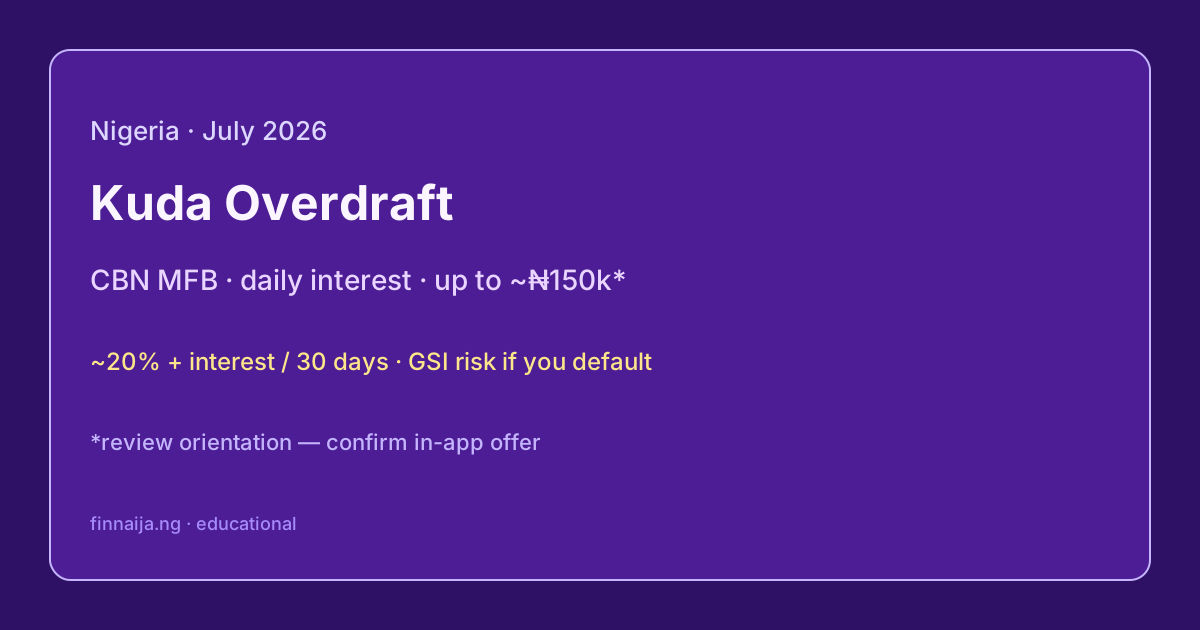
U3-33-NG-20260724Kuda Overdraft (often searched as Kuda loan) is short-term, collateral-free credit inside the Kuda app, issued by Kuda Microfinance Bank Limited — CBN-licensed and upgraded toward national MFB status (announced around late 2025/early 2026). Deposits are NDIC-insured within microfinance coverage (commonly discussed at up to ₦2m per depositor — lower than many deposit money banks’ ₦5m cap). It is not a separate pirate loan app: offers appear after algorithmic scoring of your Kuda activity (and sometimes linked bank data via Mono).
Quick answer: use Kuda as a real main account (salary, transfers, bills), wait for an overdraft offer, borrow only what you can clear, and treat daily interest seriously — at 0.3%/day, ₦10,000 costs about ₦30/day. Minimum repayment frameworks often require roughly 20% of principal plus interest every 30 days with a short grace window. Default risks include account freezes, credit bureau hits, and GSI-style recovery across BVN-linked banks.
July 2026 update: Kuda credit status and borrower checks
REDO-R14-NG-20260724Kuda operates in Nigeria as a CBN-licensed microfinance bank. In the 2025–2026 licence cycle, major digital lenders including Kuda were upgraded toward national MFB status, which raises capital expectations and allows broader physical presence for customer service. Always confirm the current licence on the CBN list of microfinance banks and NDIC insured institutions — do not rely only on app store claims. Deposit insurance ceilings for MFBs differ from commercial banks; check NDIC for the live limit.
Kuda’s main short-term credit product is typically an overdraft-style facility tied to account activity rather than a classic multi-year personal loan. Limits start small and can grow with repayment history; pricing is personalised and often quoted as daily interest. Treat blog APRs as orientation only: the in-app breakdown of principal, interest and minimum repayment is binding. Money deposited into the spend account may auto-clear the overdraft. Missed payments can close the facility and feed credit bureaux.
Before accepting: (1) verify CBN/FCCPC status; (2) read total naira cost, not only the daily percent; (3) avoid stacking multiple loan apps; (4) never pay “processing fees” upfront to unknown APKs or apps that demand your contacts. Educational content for finnaija.ng — not a credit offer.
Licence and product shape
Kuda markets banking + overdraft under one app. National MFB status expands where it may operate and raises capital expectations (public notes cite ~₦5bn capital for national MFB). FCCPC digital-lending lists have included Kuda among approved platforms in recent cycles — still verify live registers. Overdraft is revolving-style spend-above-balance credit, not a 12-month amortising bank term loan.
Rates, limits, eligibility (orientation)
| Item | Often cited (2026 research) | Note |
|---|---|---|
| Daily interest | ~0.23%–0.8% on amount used | Confirm in-app; personalised |
| Starter limits | ~₦1,000–₦5,000 | Grows with use |
| Upper limit (reviews) | Up to ~₦150,000 | Not guaranteed |
| Repayment cycle | ~20%+interest each ~30 days | + grace days in materials |
| Eligibility | Active Kuda use; tiers/BVN/NIN | May link banks via Mono |
| Collateral | None | Behavioural scoring |
Example only at 0.3%/day; at 0.8%/day interest is more than double. FIJ covered cases where long-held overdrafts ballooned — daily rates punish delay.
How to activate and repay
- Use Kuda heavily for legitimate flows; complete higher KYC tiers.
- Watch for Borrow/Overdraft banner; read offer letter, daily rate, limit.
- Activate with PIN/biometrics.
- Spend within limit; any deposit to Spend can auto-clear debt.
- Meet minimum cycle payments so the facility stays open; pay off fully when you can to stop daily interest.
Risks: GSI, bureaux, support
As a licensed MFB, Kuda can use industry recovery tools. GSI frameworks allow past-due recovery from other BVN-linked banks. Defaults hit CRC/FirstCentral-style bureaux and block future credit. Support quality fluctuates (2026 restructuring reports); screenshot statements and escalate in writing.
Do not confuse transfer stamp duty (₦50 on ≥₦10k industry-wide) or VAT on post-free transfer fees with overdraft interest — different lines on the statement.
Kuda vs OPay, EaseMoni, FairMoney, PalmPay
| Product | Best fit | Rough limit style |
|---|---|---|
| Kuda Overdraft | Short, in-app banking float | Up to ~₦150k reviews |
| OPay ecosystem loans | Payments app + partner credit | EaseMoni Play up to ₦2m |
| EaseMoni / OKash | Structured personal cash loans | High tickets; monthly % bands |
| FairMoney / Carbon | Larger personal loans | Multi-million guides |
| PalmPay FlexiCash | Wallet-linked cash/BNPL | Often lower ceilings |
Related guides: OPay loan, PalmPay loan, FairMoney (if live), and credit bureau.
When not to use Kuda Overdraft
- Multi-month financing needs — daily interest is the wrong instrument.
- Non-essentials / lifestyle float with no clear inflow.
- Already past-due elsewhere — stacking OD + apps accelerates GSI risk.
- Need > ~₦150k — look at dedicated lenders, not OD.
Educational finnaija.ng content — not a Kuda offer. Confirm rates, NDIC wording and offer letters in the live app (July 2026 research).
Practical test: if you cannot repay the full balance within two weeks, model the 30-day minimum payment and ask whether a structured personal loan with a fixed due date is safer than daily interest. Never borrow on Kuda to clear another app’s late fees — that is how daily rates and GSI interact badly.
Building eligibility without gaming the system
Kuda scores how you use the account. Salary credits, bill payments, savings pots, and steady transfers matter more than one large deposit the day before you hope for an offer. Linking external banks via Mono can help verification, but only share credentials through the official in-app flow. Fake “agents” who ask for your PIN to “unlock overdraft” are scams.
After activation, treat the limit like a credit card: spending power is not free cash. If salary lands on the 25th, avoid maxing the overdraft on the 20th unless you have another confirmed inflow. When the 30-day statement arrives, pay more than the minimum whenever possible so daily interest stops and the facility remains healthy.
Compare total cost: ₦50,000 held 30 days at 0.5%/day is about ₦7,500 interest before minimum-payment mechanics — expensive versus a short, transparent personal loan with a fixed due date. Use Kuda OD for bridge days, not for multi-month lifestyle financing. Keep one formal credit relationship clean rather than stacking OD with EaseMoni and PalmPay the same week.
Document everything: offer screenshots, daily rate, limit changes, and repayment receipts. If a dispute arises (as in public 2025 settlement stories), written evidence decides outcomes faster than chat snippets. Escalate with statement PDFs and the legal name Kuda Microfinance Bank Limited.
Checklist July 2026: CBN MFB listing, NDIC insurance note, full cost screen before accept, no parallel nano-loans, FCCPC register for any third-party loan app.