

CashUSA is not a Nigerian lender — it is a US online loan marketplace that connects American borrowers to third-party lenders. It does not underwrite naira facilities, does not sit under CBN/FCCPC consumer-lending rules, and is not a substitute for local banks or registered digital money lenders. If you searched “CashUSA Nigeria”, treat the US brand as context only and borrow through FCCPC-registered apps or deposit-money banks instead..
This page reframes a foreign brand query into operational Nigerian borrowing: who regulates digital lenders, how banks differ from apps, which documents you need, and how CRMS/GSI/credit bureaus follow you after disbursement.
Why CashUSA does not solve a Nigerian cash need
CashUSA is described in public product explainers as a marketplace, not a direct lender. That model assumes a US credit-file, US bank account and US consumer-protection stack. Nigerian underwriting instead anchors identity on BVN and increasingly NIN, reports into CRC / FirstCentral / CreditRegistry, and — for bank facilities — can rely on the CBN Credit Risk Management System (CRMS) and the Global Standing Instruction (GSI) recovery rail. None of those rails are CashUSA’s product surface.
Operational takeaway: downloading a US aggregator APK, wiring “activation fees” to strangers, or sharing BVN/NIN in a Telegram “CashUSA agent” chat is a fraud pattern, not an application path. Use regulated Nigerian channels and keep evidence of every offer letter.
FCCPC digital lending rules that replace the US marketplace idea
Digital money lenders that market consumer credit through apps or websites fall under the Federal Competition and Consumer Protection Commission’s digital-lending framework (widely discussed in 2025–2026 as the DEON / digital lending registration regime). Sources describe mandatory registration, public registers of approved Digital Money Lenders, and enforcement against unregistered or abusive apps.
- Fees cited in industry write-ups: about ₦100,000 non-refundable application fee and about ₦1,000,000 approval fee (covering a small number of apps per company, with hard caps such as five apps).
- Compliance window: a January 2026 enforcement shift after a registration deadline (sources cite 5 January 2026).
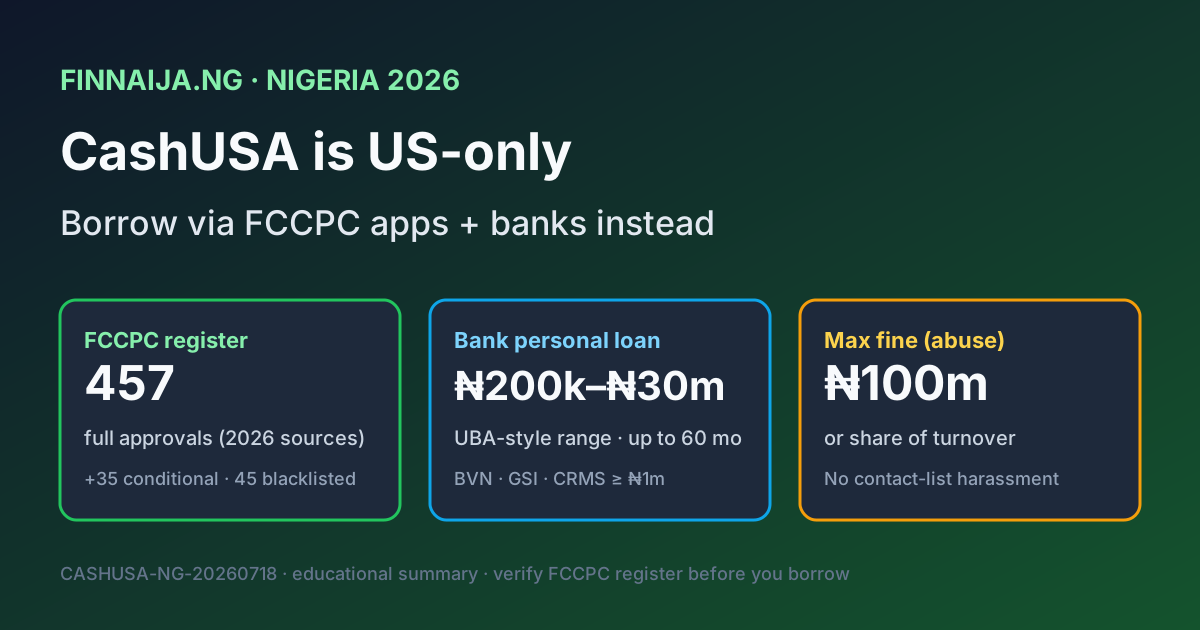
- Register scale in 2026 reporting: roughly 457 fully approved digital lenders, 35 conditional approvals, 103 apps on a watchlist posture, and about 45 blacklisted for non-compliance (figures move — always re-check the live FCCPC register before you borrow).
- Harassment ban: apps must not mine contacts, photos or external storage for debt recovery, and must not shame borrowers to friends and family.
- Sanctions: fines described up to ₦100 million or a share of annual turnover; director disqualifications; Play Store delisting and payment-rail blocks in cooperation with platforms.
| Control | What it means for you | Where to verify |
|---|---|---|
| FCCPC DML register | Only listed digital money lenders should hold your data | fccpc.gov.ng digital lending pages |
| Contact / gallery ban | Refuse apps that demand phone-book access to “score” you | App permissions before first login |
| Complaint channel | Document abuse and file evidence | lenderstaskforce@fccpc.gov.ng / contact@fccpc.gov.ng |
| Play Store identity | Developer name should match a real licensed entity | Store listing + company search |
| No upfront fee scams | Activation fees before disbursement are a classic fraud tell | Never pay to “unlock” a loan |
Chart values mirror the operational counts above — educational snapshot, not a substitute for the live register on the day you apply.
Banks vs FCCPC apps: who fits which need
Think in tickets and recovery power, not brand ads.
| Channel | Typical ticket / tenor (illustrative) | Friction | Recovery / data rails |
|---|---|---|---|
| Bank personal loan (e.g. UBA-style books) | From ~₦200,000 up toward multi-million (sources cite up to ~₦30m); tenors up to ~60 months | Employer letter, 6 months statements, salary domicile seasoning (~3 months common) | GSI across BVN-linked accounts; CRMS for large facilities |
| Bank instant / digital credit (GTB Quick Credit, UBA Click Credit type) | Often capped around ~₦5m; 1–12 month books common | Usually requires salary in that bank | Bank rails + bureau reporting |
| FCCPC micro apps | Study ranges often ₦1,000–₦50,000 short cycles; popular names may advertise higher ceilings | BVN/NIN + phone data; less paper | Bureau reporting when legitimate; no GSI powers of deposit banks |
| Larger digital / MFB brands (examples cited: FairMoney, Renmoney bands) | Ceilings discussed into multi-million naira with longer app tenors up to ~365 days | Heavier KYC as ticket grows | Still not a US marketplace — local licence + bureau file |
Banks win on larger capital, longer amortisation and institutional recovery (no contact shaming). Apps win on speed for informal/self-employed cash-flow gaps when the lender is on the FCCPC register and total cost is still readable in naira. For credit-file hygiene after either path, see the Nigerian credit bureau guide and credit score primer.
Documents and eligibility that actually move decisions
Identity: BVN is the standard financial identity anchor; NIN is increasingly treated as a national credit-profile key (CREDICORP-linked initiatives in sources). Income: six months of bank statements, employer confirmation / awareness letter, staff ID and valid government ID remain bank staples. Seasoning: many bank instant products want salary already domiciled for roughly three consecutive months. Apps: small tickets may lean on NIN + smartphone signals; larger tickets re-introduce BVN and statement analysis.
Before you apply anywhere, pull free/paid reports from CRC, FirstCentral or CreditRegistry so surprises appear on your desk first — not after a hard enquiry spike. Defaults on micro apps still land on the same identity spine and can block bank facilities later. Pair this with the practical list on legit loan apps in Nigeria.
CRMS, GSI and why “hide the money in another bank” fails
The CBN CRMS is described as capturing consolidated facilities from about ₦1 million aggregate outstanding upward, so large personal exposures are visible across institutions. The GSI mandate lets a lending bank recover from other BVN-linked accounts when you default on a bank book. Digital apps generally lack that inter-bank debit hammer, which is exactly why illegal apps historically abused contact lists — a practice FCCPC rules now target with privacy bans and heavy fines. NITDA’s SokoLoan sanction (₦10 million fine cited for privacy invasion and contact messaging) is a reminder that privacy abuse is not “collection creativity”; it is a compliance event.
Red-flag checklist if you arrived from a CashUSA search
- US marketplace branding with naira “agents” on WhatsApp — walk away.
- APK sideload instead of a Play listing that matches a licensed entity.
- Upfront activation / insurance fee before any disbursement.
- Permission demands for contacts, gallery or call logs.
- Auto-loans without explicit opt-in consent.
- No FCCPC register match for the brand name on the day you apply.
If harassment starts: revoke permissions, uninstall, screenshot every message, note the amount and due date, then file with FCCPC channels above. Keep repayment proofs even when you dispute — they are your defence if a bureau line is wrong.
Worked comparison: ₦300,000 emergency vs ₦5,000,000 project
₦300,000 emergency, need funds same week: an FCCPC-listed app or a bank instant product (if salary is already domiciled) can be rational. Compare total repayable in naira, not “daily rates” screenshots. Prefer tenors that match the cash-in date of your next salary, not hope.
₦5,000,000 renovation or multi-month cash plan: bank personal loan underwriting is the cleaner path — employer letter, statements, possible GSI consent, clearer amortisation to 36–60 months depending on product. Stacking five micro apps to fake a large ticket is how bureau files fracture.
What to do this week
Confirm identity documents (BVN, NIN, government ID). Pull at least one bureau report. If you bank with a salary account, check your bank’s personal / quick credit product pages and required seasoning. If you need a small bridge, open the FCCPC register first, then shortlist two listed apps maximum — multiple hard enquiries in one afternoon still leave a trail. For related product shapes, see rapid credit options and bridge loan framing on this site.
Bottom line: CashUSA is a US marketplace story; Nigerian consumers solve the same cash intent with FCCPC-registered digital lenders and CBN-supervised banks, under BVN/NIN identity, bureau reporting, and — for bank books — GSI/CRMS discipline..
Keep written records of applications, bureau reports and repayment SMS for at least one full year so you can dispute errors and compare total cost across offers without relying on chat screenshots alone. Prefer official portals over middlemen who claim foreign “CashUSA approval” for a fee.
When two offers look similar, rank them by (1) licence status on the day of apply, (2) total naira repayable on a fixed ticket, (3) whether recovery uses institutional rails instead of social shame, and (4) whether the product will still make sense if your salary slips by one cycle.