


Construction loans in Nigeria represent a vital financial tool for individuals and developers looking to fund property development. These specialized loans, often referred to as home building or mortgage construction financing, are designed to disburse funds in phases, aligning with the progressive stages of construction. This phased approach helps manage project costs and ensures that funds are released only as work progresses, providing a layer of security for both the borrower and the lender.
Major financial institutions in Nigeria, such as GTBank, Access Bank, Zenith Bank, First Bank, and UBA, are active participants in this market. They offer various products under their mortgage or home financing portfolios that cater specifically to construction needs. These loans are crucial for bridging the gap between available personal savings and the substantial capital required to build a home from the ground up.
Understanding the intricacies of these loans is paramount for any prospective borrower. This includes knowing the typical interest rates, which generally range from 16% to 31% annually, although specific figures can fluctuate based on the bank and prevailing economic conditions. The Central Bank of Nigeria's (CBN) Monetary Policy Rate (MPR) plays a significant role in influencing these rates, making it a critical factor to monitor.
Beyond interest rates, eligibility criteria, required documentation, and the application process are all key elements that borrowers must navigate. Each bank will have its specific requirements, but common themes include a stable income, a good credit history, and a significant equity contribution from the borrower. This guide aims to demystify these aspects, providing a clear roadmap for securing construction finance in Nigeria.
The Nigerian financial landscape is dynamic, with regulations from the CBN and initiatives like bank recapitalization efforts directly impacting lending practices. For instance, the recent recapitalization requirements for commercial banks, set at N500 billion, are designed to strengthen the banking sector and ensure stability, which in turn supports more robust lending for projects like construction.
Prospective homeowners must also be aware of the advantages and risks associated with construction loans. While they offer benefits such as phased funding and potential tax deductibility of interest, they also carry risks like high interest rates, potential project delays, and the possibility of foreclosure if repayment obligations are not met. Careful planning and due diligence are therefore essential before committing to such a significant financial undertaking.
Banks Offering Construction Loans in Nigeria
Several prominent Nigerian banks provide robust construction loan options, often integrated into their broader mortgage or home financing products. These institutions are critical players in facilitating home ownership and development across the country. Each bank has its unique offerings, but they generally aim to support borrowers through the various stages of their construction projects.
GTBank, for instance, offers construction finance, with interest rates typically ranging around 16-20%. While these rates are sometimes quoted for business loans, they can be adapted for individual construction projects, reflecting the bank's flexibility. GTBank emphasizes strong project assessment and borrower capability, ensuring that funds are directed towards viable developments.
Access Bank provides a comprehensive suite of personal and business loans, which include options for property development. Their interest rates usually fall between 18% and 25%. Access Bank is known for its customer-centric approach, often providing support and guidance through the loan application and disbursement processes, making it a popular choice for many aspiring homeowners.
Zenith Bank, a leader in the Nigerian banking sector, features competitive rates of 17-24% for its construction-related financing. The bank's adherence to recapitalization guidelines further solidifies its position as a stable lender. Zenith Bank typically requires detailed project plans and a clear repayment strategy, ensuring the sustainability of the loan.
First Bank, one of Nigeria's oldest and largest financial institutions, offers construction loans with rates ranging from 17% to 24%. Their focus is often on verified projects with clear milestones and robust oversight. First Bank's extensive branch network and long-standing experience in the Nigerian market provide a strong foundation for its mortgage and construction financing products.
UBA (United Bank for Africa) also provides construction financing, with interest rates generally between 18% and 25%. UBA is known for its support of phased disbursements, which aligns perfectly with the progressive nature of construction projects. This approach helps borrowers manage their cash flow effectively and ensures that funds are released as construction milestones are met.
Eligibility Criteria for Construction Loans
Securing a construction loan in Nigeria involves meeting specific eligibility criteria set by the lending institutions. These requirements are designed to assess the borrower's financial stability, repayment capacity, and the viability of the construction project. Adhering to these criteria is crucial for a successful application and timely loan approval.
A primary requirement across all major banks is a steady and verifiable source of income. Lenders need assurance that the borrower can consistently meet their repayment obligations. This is often demonstrated through salary payslips for employed individuals, covering a period of 3-6 months, or bank statements for self-employed applicants, typically showing at least 6 months of consistent account activity.
Age restrictions are also common, with most banks requiring applicants to be between 21 and 65 years old. This ensures that borrowers are within an economically active age bracket, allowing sufficient time for loan repayment before retirement. Nigerian residency is another standard requirement, reflecting the local nature of these financing products.
A critical financial metric considered is the debt-service ratio, which typically needs to be under 33%. This ratio indicates the percentage of a borrower's income that goes towards debt repayments. A lower ratio suggests greater financial flexibility and a higher capacity to service the new construction loan, making the applicant more attractive to lenders.
Borrowers are generally required to make a minimum equity contribution towards the project cost. This ranges from 10% to 30% of the total estimated construction cost. This upfront investment demonstrates the borrower's commitment to the project and reduces the overall risk for the bank. A higher equity contribution can sometimes lead to more favorable loan terms.
Beyond personal financial metrics, the construction project itself must meet certain criteria. This includes having approved building plans from the relevant state ministry, ensuring that the proposed construction complies with local regulations and standards. A clear land title, such as a Certificate of Occupancy (C of O), is also indispensable, proving legal ownership of the land where construction will take place.
Finally, a good credit history is non-negotiable. Banks will conduct thorough credit checks to evaluate the applicant's past borrowing and repayment behavior. A clean credit record signals reliability and financial responsibility, significantly improving the chances of loan approval. For self-employed individuals, maintaining well-managed business accounts for at least six months can also strengthen their application.
| Bank | Interest Rate Range (Annual) | Key Fees |
|---|---|---|
| GTBank | 16.90-20.90% | 1% arrangement, 0.5% valuation |
| Access Bank | 18.90-25.90% | Processing 1-2% |
| Zenith Bank | 17.90-24.90% | Legal fees ~0.75% |
| First Bank | 17.90-24.90% | Appraisal N50k+ |
| UBA | 18.90-25.90% | Commitment 1% |
As of July 8, 2026, the annual interest rates for construction loans from leading Nigerian banks, including GTBank, Access Bank, Zenith Bank, First Bank, and UBA, have experienced another slight upward adjustment. Rates now range from 16.90% to 25.90%, reflecting the current economic climate and the Central Bank of Nigeria's (CBN) Monetary Policy Rate (MPR), which stands at approximately 28.40%. Borrowers should prioritize obtaining the most current rates directly from banks to ensure accurate financial planning for their construction projects.
In addition to the primary interest rates, various fees are standard components of construction loan agreements. These typically include arrangement fees (1-2%), legal fees (around 0.75%), and valuation or appraisal fees. For instance, Access Bank's processing fees range from 1-2%, while UBA charges a 1% commitment fee. It is crucial for applicants to request a comprehensive breakdown of all these charges. Understanding the full cost of borrowing, beyond just the interest rate, is vital for effective budget management and avoiding unexpected expenses.
The eligibility criteria for construction loans remain consistent and rigorous across all major banks. Applicants must demonstrate a stable and verifiable income, typically proven through payslips or bank statements, and fall within the 21-65 age bracket. Nigerian residency and a clean credit history are indispensable. A debt-service ratio below 33% is generally preferred. Furthermore, a minimum equity contribution of 10-30% of the total project cost is required, along with approved building plans and a valid land title, to signify both financial commitment and project legality.
Interest Rates and Fees: A Detailed Breakdown
Understanding the financial implications of a construction loan goes beyond just the headline interest rate. Borrowers must also consider various fees and charges that can significantly impact the total cost of borrowing. These rates and fees are annual and are often tied to the Central Bank of Nigeria's Monetary Policy Rate (MPR), which the CBN held at 26.5% through May 2026, serving as the benchmark for lending rates.
| Bank | Interest Rate Range (Annual) | Key Fees |
|---|---|---|
| GTBank | 16-20% | 1% arrangement, 0.5% valuation |
| Access Bank | 18-25% | Processing 1-2% |
| Zenith Bank | 17-24% | Legal fees ~0.75% |
| First Bank | 17-24% | Appraisal N50k+ |
| UBA | 18-25% | Commitment 1% |
Beyond the primary interest rates, several additional fees are typically associated with construction loans. These can include arrangement fees, usually 1-2% of the loan amount, covering the administrative costs of setting up the loan. Legal review fees, often ranging from 0.5-1%, are charged for the legal documentation and securing of the loan. Valuation fees are for assessing the property's value, which is crucial for the bank's collateral. Furthermore, insurance premiums for the property during construction are also a standard requirement, protecting against unforeseen circumstances.
It is crucial for applicants to request a comprehensive breakdown of all fees and charges from their prospective lenders. This transparency allows for an accurate comparison of different loan offers and helps in calculating the true cost of borrowing. Some banks may also charge commitment fees, especially if the loan is approved but funds are not immediately drawn, typically around 1% of the undisbursed amount. Understanding these costs upfront prevents surprises and enables better financial planning.
The Application Process for Construction Loans
The application process for construction loans in Nigeria is structured and typically involves several key stages, ensuring due diligence from both the borrower and the bank. Understanding these steps can help streamline the application and increase the chances of approval. The journey begins with initial research and self-assessment.
The first step for any prospective borrower is to assess their financial needs and prequalify with potential lenders. This can often be done through online bank applications or by visiting a bank branch. During this stage, banks provide an initial assessment of eligibility based on basic financial information, giving the applicant an idea of their borrowing capacity.
Once prequalified, the applicant must gather all required documents. This extensive list includes personal identification, proof of income, employment letters, tax clearances, and crucially, all project-related documents. These construction-specific documents include approved building plans, land titles (such as a Certificate of Occupancy), a detailed valuation report, a bill of quantities, and information about the chosen contractor.
With all documents in hand, a formal application is submitted to the bank. This initiates the bank's internal review process, which includes a thorough credit appraisal. The bank will scrutinize the applicant's credit history, financial statements, and debt-service ratio to determine their repayment capability and creditworthiness. Simultaneously, the bank will arrange for a site valuation to assess the property's current value and potential future value upon completion.
Following a successful credit appraisal and site valuation, the loan moves towards approval. If approved, the applicant will receive a letter of offer outlining the loan terms and conditions. Upon acceptance, the borrower and the bank will sign formal loan agreements. These legal documents detail the responsibilities and obligations of both parties, including repayment schedules, interest rates, and conditions for fund disbursements.
A distinctive feature of construction loans is the phased disbursement of funds, often referred to as "draws." Funds are not released as a lump sum but rather in stages, tied to the completion of specific construction milestones. Common disbursement points include the foundation stage, wall erection, roofing, and finishing. This method ensures that funds are utilized as intended and allows the bank to monitor progress.
Throughout the construction period, the bank will typically arrange for periodic inspections by their project monitors or accredited professionals. These inspections verify that construction is progressing according to the approved plans and that the quality of work meets standards. Repayment of the loan usually commences post-completion, or as stipulated in the loan agreement, often after a grace period.
Required Documents for Construction Loan Applications
A meticulously prepared set of documents is vital for a smooth and efficient construction loan application process in Nigeria. Banks require comprehensive documentation to assess both the borrower's financial standing and the feasibility and legality of the proposed construction project. Missing or incomplete documents can cause significant delays.
For personal identification, applicants must provide valid government-issued IDs, such as an international passport, National Identity Number (NIN) slip, or a driver's license. Proof of income is equally crucial. Salaried employees will typically need to submit their payslips for the last 3-6 months, along with an employment letter confirming their status and salary. Self-employed individuals must provide their bank statements for at least the past 6 months to demonstrate consistent income and financial activity.
Tax compliance is another key requirement. Applicants will generally need to provide their Tax Clearance Certificate (TCC) or other proof of tax payment, demonstrating adherence to national tax regulations. This provides an additional layer of financial credibility to the application.
Project-specific documents are arguably the most extensive part of the application. Foremost among these are the building plans, which must be officially approved by the relevant state ministry responsible for physical planning and urban development. These plans confirm that the construction adheres to local zoning laws and structural standards. Alongside the plans, a clear and legally recognized land title, such as a Certificate of Occupancy (C of O), is mandatory to prove ownership of the construction site.
A professional valuation report is essential. This report, typically prepared by an accredited valuer, assesses the current market value of the land and the projected value of the property upon completion. Banks use this report to determine the collateral value of the property. Additionally, a detailed Bill of Quantities (BoQ) prepared by a quantity surveyor is required. The BoQ provides an itemized breakdown of all materials, labor, and other costs involved in the construction, allowing the bank to understand the total project cost and disburse funds appropriately.
Information about the contractor undertaking the project is also usually requested. This might include their registration details, experience, and sometimes their financial standing. This ensures that a reputable and competent professional is engaged in the construction, minimizing project risks. Finally, proof of equity contribution, demonstrating that the borrower has invested their agreed-upon percentage of the project cost, completes the essential documentation package.
Construction loans — July 2026
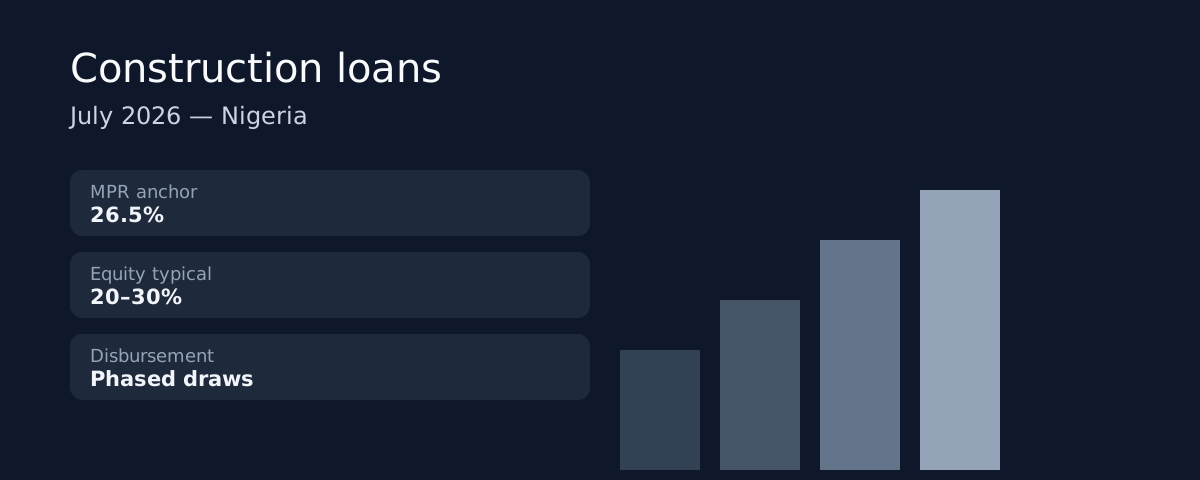
The CBN retained the Monetary Policy Rate (MPR) at 26.5% at its May 19–20, 2026 MPC meeting — commercial construction and mortgage pricing remains negotiated above this anchor, not a single published board rate. Re-check each lender's tariff the same day you apply.
Access Bank Off-Plan Mortgage explicitly finances construction or completion in milestones on bank-approved projects; Easy Home Mortgage requires a minimum 20% equity for employed and self-employed borrowers, with individual limits up to ₦500 million on published product sheets. FHA (Federal Housing Authority) also lists dedicated construction/home-renovation finance alongside commercial bank products.
| Product angle | Typical rule | Why it matters |
|---|---|---|
| MPR anchor | 26.5% (May 2026) | Floating quotes move after MPC |
| Equity | 20–30% of build cost | Lower LTV improves approval odds |
| Disbursement | Phased draws | Funds release on QS/site milestones |
| Documents | Approved plans + C of O | Delays block drawdowns |
Stress-test your budget at +1% above the offer rate before signing — with CRR at 45% for deposit money banks, liquidity remains tight and spreads can widen between GTBank, Access, Zenith, First Bank and UBA even on the same project.
The application process for construction loans is methodical, ensuring thorough review by lenders. It begins with an initial needs assessment and pre-qualification, which can be done through bank channels. Subsequently, applicants must meticulously gather and submit a comprehensive set of documents, including valid identification, proof of income, officially approved building plans, and a detailed Bill of Quantities. Banks then conduct rigorous credit appraisals and site valuations. Upon approval, formal loan agreements are signed, and funds are disbursed in phased draws, directly linked to the achievement of specific construction milestones, with bank inspectors providing ongoing monitoring.
While construction loans offer significant advantages, such as structured funding that matches project progress and the potential for tax-deductible interest, they are not without substantial risks. The current elevated interest rates (16.90-31.90%) can lead to a considerable increase in the overall cost of borrowing. Project delays, often stemming from unforeseen issues or regulatory inspections, can extend the loan term and result in higher cumulative interest payments. The risk of loan default and subsequent foreclosure is a serious concern, and inflationary pressures can further escalate material and labor costs, making diligent financial planning and a robust contingency fund absolutely essential.
Expert advice for individuals seeking construction loans emphasizes proactive preparation and strategic decision-making. It is strongly recommended to compare multiple loan offers from various banks, including GTBank, Access Bank, Zenith Bank, First Bank, and UBA, to secure the most favorable terms. Engaging a qualified quantity surveyor early is crucial for accurate cost estimation. Maintaining a substantial equity contribution (20% or more) can lead to better rates. Furthermore, staying informed about CBN’s quarterly MPR announcements and considering fixed-rate loan options can provide crucial financial stability. Prudent financial management also dictates avoiding borrowing more than 50% of the project’s total cost to effectively mitigate financial risk.
Advantages and Risks of Construction Loans
Construction loans offer a unique financial pathway for individuals and businesses aiming to build property from the ground up. However, like all financial instruments, they come with a distinct set of advantages and inherent risks that borrowers must carefully consider. A balanced understanding of both sides is crucial for making an informed decision.
Pros
- Phased funding matches project progress, preventing overspending.
- Interest paid is often tax-deductible, reducing overall cost.
- Builds equity from the ground up, increasing personal wealth.
- Allows for custom design and personalized home features.
- Access to professional oversight via bank inspectors.
Cons
- High interest rates amplify borrowing costs significantly.
- Potential for project delays due to inspections and approvals.
- Risk of foreclosure if loan repayments are defaulted.
- Inflation can erode the value of the project and increase costs.
- Strict eligibility criteria and extensive documentation.
One of the primary advantages of construction loans is their phased funding structure. This means money is disbursed in installments as construction milestones are met, rather than in one lump sum. This controlled release of funds helps manage the project budget more effectively, reduces the risk of misusing funds, and ensures that progress is consistently monitored. For borrowers, this can provide peace of mind, knowing that the bank is also invested in the successful completion of the project.
Another significant benefit is the potential for tax-deductible interest. In many jurisdictions, including Nigeria, the interest paid on mortgage-related loans can be eligible for tax relief, which can lower the overall cost of borrowing. Furthermore, building a new property allows the owner to customize it exactly to their specifications, creating a home that perfectly matches their needs and preferences, and simultaneously building equity from the ground up as the property value increases with construction progress.
However, construction loans are not without their risks. The interest rates in Nigeria, typically ranging from 16-31%, are considerably high. These rates can significantly amplify the total cost of the project, especially if there are construction delays. Delays themselves are a common risk, often stemming from unforeseen issues with inspections, material sourcing, labor disputes, or regulatory approvals. Such delays can extend the interest-accrual period and increase overall expenses.
The most severe risk is default, which can lead to foreclosure. If a borrower fails to meet their repayment obligations, the bank has the right to seize and sell the property, including the partially constructed building, to recover its funds. Moreover, high inflation, a persistent challenge in Nigeria, can erode the real value of the loan and significantly increase the cost of materials and labor, potentially pushing the project over budget. Therefore, thorough planning and a robust contingency fund are essential.
Regulatory Landscape and Oversight
The construction loan market in Nigeria operates within a well-defined regulatory framework, primarily governed by the Central Bank of Nigeria (CBN). These regulations are designed to ensure the stability of the financial system, protect consumers, and promote sound lending practices. Understanding this regulatory environment is crucial for both lenders and borrowers.
The CBN plays a pivotal role in setting monetary policy, which directly influences the interest rates offered by commercial banks. By setting the Monetary Policy Rate (MPR), the CBN provides a benchmark for lending rates, ensuring that banks operate within acceptable parameters. The CBN also sets various lending caps and risk weights, which dictate how much banks can lend and how they must account for the risk associated with different loan types, including construction loans. This oversight helps prevent excessive risk-taking by financial institutions.
While the Nigeria Deposit Insurance Corporation (NDIC) insures deposits up to N5 million, it's important to note that this protection does not directly extend to loans. The NDIC's mandate is to protect depositors in the event of bank failure, thereby fostering confidence in the banking system. However, the stability ensured by NDIC and CBN regulations indirectly benefits borrowers by ensuring that the banks they borrow from are robust and well-regulated.
A significant recent development in the Nigerian banking sector is the CBN's recapitalization directive for commercial banks. For instance, commercial banks are required to raise their capital base to N500 billion by 2026. This initiative aims to strengthen the financial resilience of banks, enabling them to absorb shocks, expand their lending capacity, and better support key economic sectors, including real estate and construction. This enhanced capital base contributes to greater stability in the lending market.
Construction loans, especially those for residential purposes, often align with the guidelines set by the National Housing Fund (NHF). The NHF aims to provide affordable housing solutions, and banks offering construction financing may integrate NHF requirements into their loan products to make them more accessible and affordable for a wider segment of the population. This includes considerations for loan tenures and repayment structures that suit average income earners.
Overall, the regulatory environment in Nigeria strives to create a structured and secure lending landscape. Compliance with these regulations ensures that banks operate prudently, protecting both their assets and the interests of their customers. Borrowers should always ensure that their chosen financial institution is fully compliant with all relevant CBN and other regulatory directives.
Expert Tips for Securing a Construction Loan
Navigating the complexities of construction loans requires strategic planning and careful execution. Drawing on expert advice can significantly improve your chances of securing favorable terms and successfully completing your construction project. These tips are designed to help you prepare thoroughly and make informed decisions.
Firstly, it is paramount to compare multiple loan quotes from different banks. Do not settle for the first offer you receive. Approach GTBank, Access Bank, Zenith Bank, First Bank, and UBA, among others, to understand their specific interest rates, fees, and terms. This comparison will allow you to identify the most competitive and suitable loan product for your needs. Interest rates can vary, and even a small difference can lead to substantial savings over the loan's tenure.
Engaging a reputable quantity surveyor (QS) early in the process is a non-negotiable step. A QS will provide an accurate Bill of Quantities (BoQ) and a detailed cost estimate for your project. This professional assessment is crucial for securing bank approval, as it demonstrates a clear and realistic understanding of the project's financial requirements. An accurate BoQ also helps prevent cost overruns and ensures that the bank's valuations are in line with actual project costs.
Aim to maintain a significant equity contribution, ideally 20% or more of the total project cost. A higher equity stake not only reduces the amount you need to borrow but also signals financial strength and commitment to the bank. This can often lead to more favorable interest rates and loan terms, as it reduces the bank's risk exposure. Banks are more inclined to lend to borrowers who have a substantial personal investment in their project.
If available, consider fixed-rate options for your construction loan. While variable rates might initially seem lower, they expose you to the risk of interest rate hikes, which can significantly increase your monthly repayments. A fixed rate provides stability and predictability, allowing you to budget more effectively without worrying about fluctuations in the Monetary Policy Rate (MPR) set by the CBN. Even if fixed rates are slightly higher initially, they offer long-term peace of mind.
Stay informed about changes in the CBN's Monetary Policy Rate (MPR), which is usually announced quarterly. The MPR directly influences commercial banks' lending rates. By tracking these changes, you can anticipate potential shifts in interest rates and plan your application or refinancing strategies accordingly. Being proactive allows you to time your loan application when rates are more favorable or prepare for potential increases.
Finally, avoid over-borrowing. As a rule of thumb, experts suggest not borrowing beyond 50% of the total project cost. While construction loans provide necessary capital, taking on too much debt can lead to financial strain and increased risk of default. Ensure that your debt-service ratio remains manageable (ideally under 33%) and that you have a robust contingency fund to cover unforeseen expenses. This prudent approach will safeguard your financial future and the successful completion of your dream home.