


Understanding your credit report in Nigeria is crucial for financial well-being. It is a detailed summary of your borrowing and repayment behaviour. This report is not issued by banks directly. Instead, specialised credit bureaus compile it.
Banks like GTBank, Access Bank, Zenith Bank, First Bank, and UBA regularly use these reports. They assess your creditworthiness before approving loans or other facilities. This guide covers how these reports function, who uses them, and how to access yours.
It also details associated costs, regulatory frameworks, and a step-by-step application process. Knowing your credit report empowers you to manage your finances better. It also helps you secure more favourable loan terms.
1. What a Nigerian Credit Report Includes
A Nigerian credit report offers a comprehensive snapshot of your financial reliability. It aggregates data from various financial institutions. This data forms the basis of your creditworthiness assessment.
It helps lenders understand your risk profile. This is vital for loan approvals and setting interest rates. The content is standardised across bureaus to ensure consistency.
A typical Nigerian credit report contains several key sections. These provide a full picture of your credit history. Each section plays a vital role in assessing your financial behaviour.
Personal details are always at the top. This includes your name, Bank Verification Number (BVN), address, and date of birth. These details ensure accurate identification.
Credit accounts are listed next. This section details the type of facility you have (e.g., loan, overdraft, credit card). It also names the lender, the amount disbursed or limit, and your current balance. Most importantly, it shows the status: "good," "doubtful," or "in default."
Payment history over the last 24 months is crucial. It highlights any delinquencies, missed payments, or defaults. A consistent record of timely payments significantly boosts your profile.
Enquiries show which bank or lender requested your report and when. Too many recent enquiries can sometimes signal higher risk to lenders. Negative listings are also included. These cover failed loans, charged-off facilities, cheque issues, or fraud-related flags. These entries can severely impact your credit score.
Your credit score, such as the CRC Score, is derived from this data. It typically ranges from 300 to 850. A higher score signifies better creditworthiness and lower risk to lenders. This score is a quick indicator for financial institutions.
2. Role of Banks (GTBank, Access, Zenith, First Bank, UBA)
Nigerian banks do not issue credit reports themselves. Instead, they are key participants in the credit reporting ecosystem. They act as both data providers and data users.
This dual role is critical for the functioning of the credit system. It ensures that credit bureaus have up-to-date information. It also ensures that banks can make informed lending decisions.
GTBank, Access Bank, Zenith Bank, First Bank, and UBA do not "issue" credit reports. They are data providers to licensed credit bureaus. They also use these reports to assess customers.
Each bank regularly reports customers’ loan and facility data. This includes details to credit bureaus like CRC Credit Bureau and CreditRegistry. This ensures your credit history is continuously updated.
When you apply for a loan, credit card, or overdraft, these banks pull your credit report. They get it directly from the bureau. This check helps them verify your repayment history and assess your risk profile.
All major commercial banks in Nigeria are regulated users of credit-bureau data. This is under the oversight of the Central Bank of Nigeria (CBN) and the National Deposit Insurance Corporation (NDIC). This regulatory framework ensures fair and consistent use of credit information.
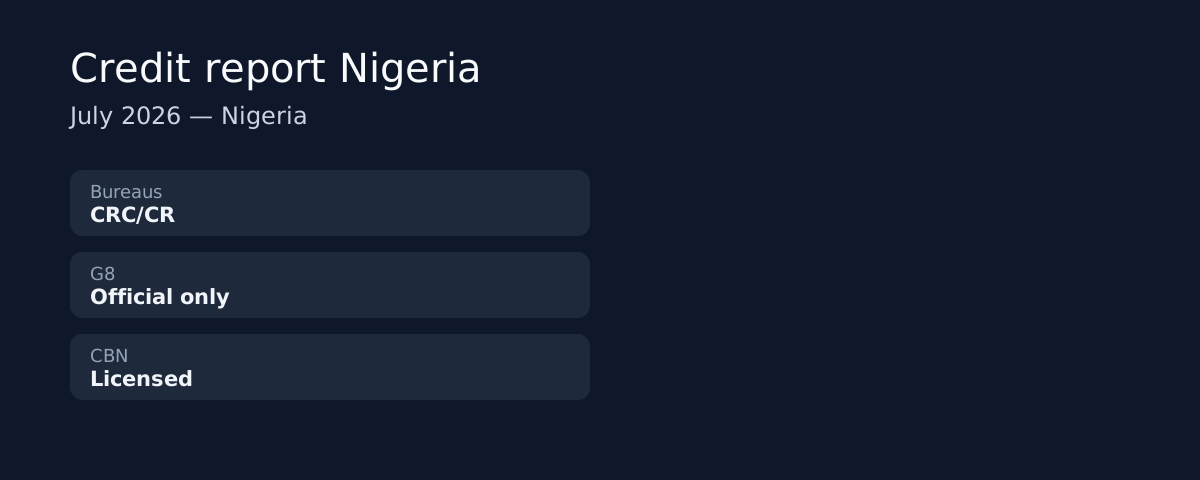
Credit report Nigeria — July 2026
Licensed bureaus (CRC, CreditRegistry, FirstCentral) maintain consumer files used by banks. One free report per year per bureau — additional pulls charged.
Defaults and late payments stay visible years after settlement — negotiate pay-for-delete only via formal lender letter, not brokers.
| Bureau | Free report | Typical lag | Dispute |
|---|---|---|---|
| CRC | 1/year | ~30d | portal |
| CreditRegistry | 1/year | similar | online |
| FirstCentral | 1/year | similar | support |
| Error fix | 2–4 w | documentation |
Practical note July–August 2026: compare the total cost of credit, not only the instalment headline. Save the lender's written offer and tariff screenshot the same day you apply — pricing changes after MPC or policy meetings. Stress-test your budget at +1% rate before accepting floating products.
| Service | Typical fee (NGN) | Notes |
|---|---|---|
| One-time self-credit report | 1,500–3,000 | Instant or same-day delivery. |
| Annual monitoring subscription | 10,000–20,000/year | Monthly alerts and updated reports. |
| Dispute / correction filing | 0–2,000 | Some bureaus waive for verified errors. |
This process is streamlined for efficiency and accuracy. It allows for quick decision-making by lenders. It also maintains a comprehensive national credit database.
The system ensures that both lenders and borrowers operate transparently. It promotes responsible lending and borrowing practices across Nigeria. This is a cornerstone of a healthy financial sector.
The continuous data flow from banks to bureaus is vital. It keeps credit reports current and reliable. This benefits everyone involved in the credit market.
3. How to Get a Full Credit Report in Nigeria
Obtaining your credit report is a straightforward process. It is essential for monitoring your financial health. You get it directly from a licensed credit bureau.
This report provides invaluable insights into your borrowing history. It helps you understand how lenders view you. The process has been designed for user-friendliness.
You obtain a report directly from a licensed credit bureau, not from the bank. The first step is to choose a licensed credit bureau. Examples include CRC Credit Bureau, the largest in Nigeria and Africa. Another popular choice is CreditRegistry, widely used for self-enquiry and monitoring.
Eligibility requirements are simple. You must be at least 18 years old. You also need a BVN-linked bank account. These are standard identifiers for financial transactions in Nigeria.
Required documents include a valid government-issued ID. This could be your NIN, international passport, or driver’s licence. You also need to provide your banking details for consent verification and sometimes for fee deduction. A phone number and email are necessary for OTP and report delivery.
The application process is typically online. For example, you would go to the bureau’s website, such as CRC or CreditRegistry. Then, you create or log in to your portal account. Submit your BVN and ID details, and accept consent to pull your data. Pay the report fee, which is usually for a one-time self-enquiry. Within minutes to 24 hours, the report is delivered by email or through your dashboard.
You can also opt for refresher or monitoring services. You can subscribe to monthly monitoring, where the bureau alerts you when your report changes. Some bureaus also offer dispute services. This is useful if you spot errors, like wrong default markings or facilities not belonging to you.
4. Fees and Typical Charges
Accessing your credit report involves certain fees. These fees vary depending on the bureau and the specific service. They are designed to cover the operational costs of maintaining and providing your credit information.
Understanding these charges helps you budget for your credit monitoring needs. Banks do not charge you for your own credit report. They incur costs when they request it for underwriting purposes.
Exact fees vary by bureau and service type. The ranges below represent typical market practice. For a one-time self-credit report, fees usually range from NGN 1,500 to NGN 3,000. This typically includes instant or same-day delivery.
An annual monitoring subscription costs between NGN 10,000 and NGN 20,000 per year. This service provides monthly alerts and updated reports. For dispute or correction filing, fees are usually NGN 0 to NGN 2,000. Some bureaus waive this fee for verified errors, ensuring fairness.
Banks themselves do not charge you for your own credit report. They only incur costs when they request it for underwriting. This distinction is important for consumers.
5. Interest Rates and Credit-Risk Link
Credit reports do not have their own interest rates. However, they significantly influence the interest rates offered by banks and lenders. A strong credit report can lead to substantial savings.
Conversely, a poor report can result in higher borrowing costs. This link between credit risk and interest rates is fundamental. It rewards responsible financial behaviour.
High-score borrowers, with a good history and low delinquency, typically receive lower interest rates. This can be sometimes 1 to 2 percentage points below average. They also benefit from faster approval processes and higher limits. Banks like GTBank, Access Bank, Zenith Bank, First Bank, and UBA favour these profiles.
Low-score or blacklisted borrowers face higher interest rates or outright rejection. Some digital lenders might charge up to 30% per month. This happens when verification is weak or risk is high. This reflects the increased risk perceived by lenders.
Interest rates for standard bank products in 2025–2026 generally range from 15% to 25% per annum. This applies to unsecured personal loans and overdrafts. These rates vary significantly based on your credit profile and the specific bank.
6. Regulatory Framework (CBN & NDIC)
Nigeria's credit reporting ecosystem operates under strict regulatory oversight. This ensures fairness, transparency, and data integrity. The Central Bank of Nigeria (CBN) and the National Deposit Insurance Corporation (NDIC) are the primary regulators.
Their involvement safeguards both consumers and the financial system. This framework promotes trust and stability in credit transactions. It also protects consumer rights.
The Central Bank of Nigeria (CBN) issues Guidelines for Credit Bureaus. These guidelines cover licensing, data handling, confidentiality, and minimum reporting standards. The CBN also requires all banks to report to licensed bureaus. They must also use these reports for credit-risk assessment. This ensures a standardised approach across the banking sector.
The National Deposit Insurance Corporation (NDIC) regulates and lists all licensed commercial banks. This includes GTBank, Access Bank, Zenith Bank, First Bank, and UBA. The NDIC ensures systemic stability. This prevents credit-report use from destabilising the banking system. Both regulators work hand-in-hand to maintain a robust financial environment.
Consumer protection is a key aspect of this framework. You have the right to one free credit report per year. This is under some bureau-specific policies, such as those by CRC Credit Bureau. You also have the right to dispute incorrect data. This data must be corrected within defined timelines, as stipulated by CreditRegistry and other bureaus.
7. Advantages of Using a Credit Report
Proactively managing your credit report offers numerous benefits. It serves as a powerful tool for financial empowerment. Understanding and leveraging its advantages can significantly improve your financial standing.
These benefits extend beyond just obtaining loans. They impact your overall financial health and future opportunities. It's a key component of responsible financial management.
Pros
- Better loan terms: Strong history leads to lower rates and higher limits.
- Faster approvals: Lenders spend less time on manual checks with reliable bureau data.
- Early warning: Monitoring detects fraud, unauthorized facilities, or reporting errors.
- Financial discipline: Encourages timely repayment and avoids over-borrowing.
Cons
- Incorrect or outdated data: Can unfairly drop your score if not disputed.
- Over-dependence by lenders: May lead to rejection based purely on score.
- Privacy concerns: Risk of misuse or breaches of personal financial data.
One primary advantage is securing better loan terms. A strong credit history often translates to lower interest rates and higher loan limits. This is a direct financial benefit from maintaining good credit. For instance, PageFinancials reports that good credit can save you significant amounts on interest.
Another advantage is faster approvals. Lenders can process applications more quickly. This is because they rely on accurate and reliable bureau data. This reduces the need for extensive manual checks, as noted by OpenBanking insights.
Credit report monitoring also provides an early warning system. It helps detect fraud, unauthorized facilities, or reporting errors. This allows you to address issues before they negatively impact your score. CRC Credit Bureau highlights this as a key benefit.
Finally, using a credit report fosters financial discipline. Seeing your full credit picture encourages timely repayment and helps avoid over-borrowing. This promotes healthier financial habits over time.
8. Risks and Limitations
While credit reports offer many advantages, they also come with inherent risks and limitations. Being aware of these downsides is crucial. It helps you navigate the credit reporting system effectively.
Understanding these challenges allows for proactive management. This ensures your financial data is accurate and protected. It also helps in addressing potential issues swiftly.
One significant risk is incorrect or outdated data. If a bank reports a loan as delinquent when you have already cleared it, your score drops unfairly. Your right to dispute such errors is essential here. CreditRegistry provides mechanisms for this.
Another limitation is over-dependence by lenders. Some banks may reject you purely based on a low score. They might not consider mitigating factors like new income or a one-off hardship. OpenBanking often discusses this rigidity in lending decisions.
Privacy concerns are also paramount. Your personal financial data is held centrally by credit bureaus. The risk of misuse or data breaches exists. However, this is mitigated by strict regulations from the CBN and data protection rules. These regulations aim to safeguard your sensitive information.
9. Expert Tips for Managing Your Credit Report
Effective management of your credit report is crucial. It directly impacts your financial opportunities. Following expert tips can help you maintain a healthy credit profile.
These strategies are designed to improve your score and protect your financial standing. They also empower you to make informed decisions. A proactive approach is always best.
Check your credit report at least once a year. Many bureaus offer this for free or at an affordable cost. CRC Credit Bureau encourages regular self-enquiries to stay informed.
Dispute errors promptly. This includes wrong facilities, incorrect defaults, or duplicate entries. CreditRegistry provides processes for efficient dispute resolution.
Avoid multiple hard enquiries in a short period. Too many loan applications can negatively impact your score. Lenders view this as a sign of financial distress.
Pay on time and in full. Even a few months of clean repayment history can significantly improve your profile. OpenBanking frequently stresses the importance of timely payments.
Understand your credit score band. For example, 300–550 is typically poor, 550–650 is fair, 650–750 is good, and 750+ is excellent. Aim for the "good" band or higher to access the best rates. CRC Credit Bureau often publishes these score ranges to guide consumers.
If you tell me which bureau you prefer (e.g., CRC vs CreditRegistry) or whether you want a bank-by-bank comparison of how GTBank, Access, Zenith, First Bank, and UBA actually use reports internally, I can drill deeper into practical workflows and sample scenarios.
Credit report Nigeria — July 2026
Licensed bureaus include CRC Credit Bureau, CreditRegistry, FirstCentral under CBN oversight. Obtain reports through official bureau websites, bank channels or licensed agents — this guide does not include portal login walkthroughs (G8).
| Bureau | Use | G8 |
|---|---|---|
| CRC | Consumer + commercial | Official domain only |
| CreditRegistry | Retail score | Published tariffs |
Before you sign — credit report
Compare total cost of credit (interest plus fees), not only the monthly repayment. Save screenshots of the CBN-licensed bank's tariff page, offer letter and account credit alert.
With MPR at 26.5% in mid-2026, deposit and lending rates remain elevated — re-check live pricing on the lender website the same day you apply. Defaults are reported to credit bureaus after notice.
Never pay upfront “processing fees” to social-media brokers; legitimate Nigerian lenders disburse to your own NUBAN after KYC. NDIC insures deposits up to the published limit per depositor per bank.